Home health services
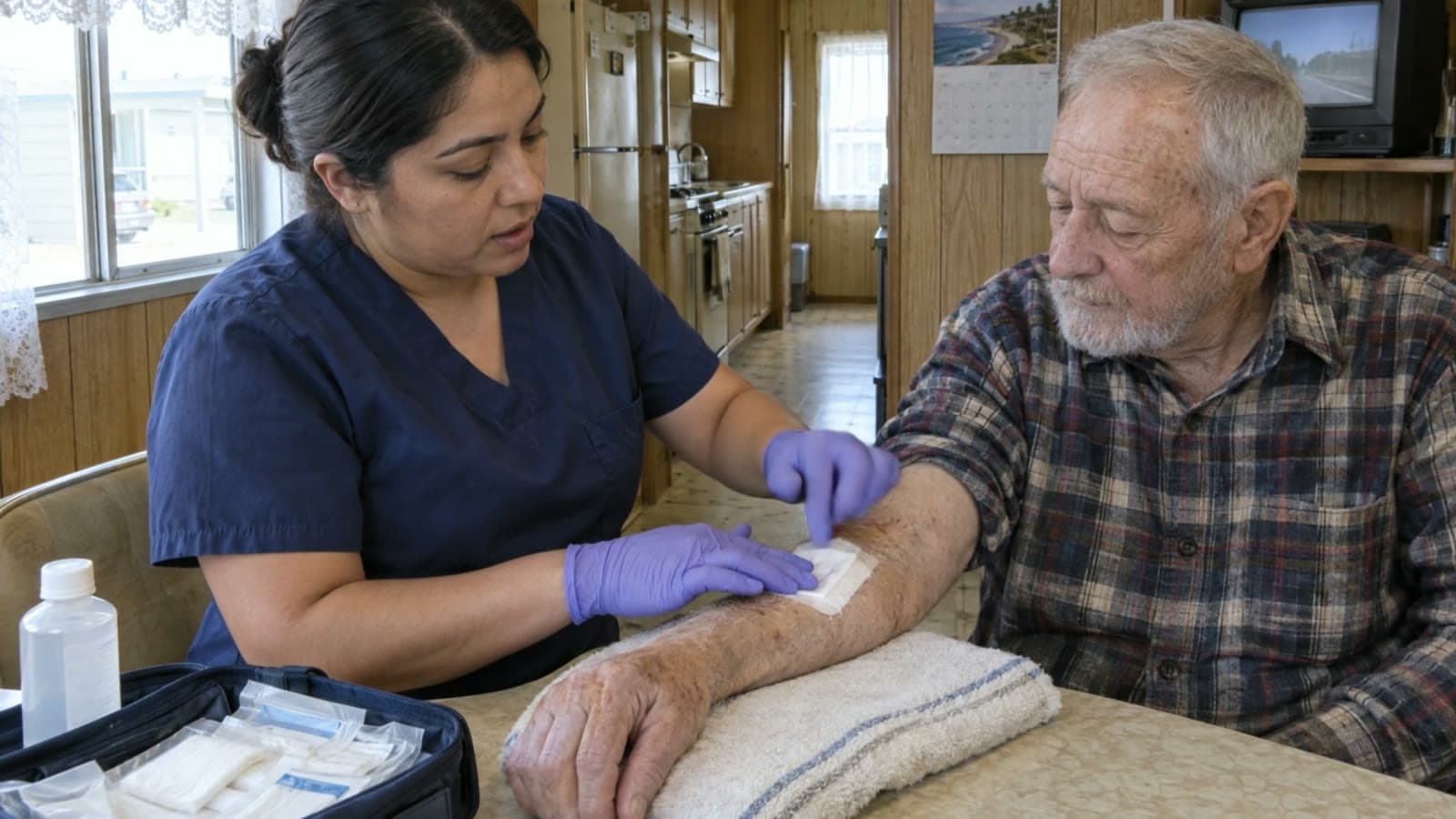
A wound that won't heal is often tied to diabetes, circulation, nutrition, or how much the patient can move, so our wound nurses check all of those too. Care follows the physician's order, and the nurse reassesses at every visit and asks the doctor to adjust treatment when the wound isn't improving.
What's included
- Certified wound nursesNurses with wound care certification handle the program and its visits.
- Assessment at every visitThe wound is measured and checked each time so the doctor gets a clear record of healing.
- Treatment under the physician's orderDressings and treatments follow the order, and the plan changes when the wound calls for it.
- Attention to overall healthBlood sugar, nutrition, and mobility are part of the plan, since they affect how a wound heals.
- Coordination with wound specialistsWe work with hospitals, wound centers, and amputation prevention centers on shared patients.
How it goes
Order and records
We get the physician's order and any notes from the hospital or wound center.
First wound visit
A wound nurse assesses the wound and the patient's overall health and starts treatment.
Ongoing visits
The nurse reassesses at each visit, changes dressings, and teaches the family what to watch for between visits.
Updates to the doctor
Progress goes to the physician, and the plan is adjusted until the wound heals or care moves to another setting.
It starts with a doctor's order
Home health care starts with an order from the patient's doctor. If you don't have one yet, call us and we'll explain how to ask for it.
Warning signs between visits
Call the doctor right away for signs of infection, such as fever, spreading redness, more pain or swelling, or a bad smell from the wound. Don't wait for the next visit. Call 911 if the patient becomes confused, has trouble breathing, or seems very sick.
For wound centers and doctors
Wound centers and doctors can fax referrals to (818) 717-7191.